


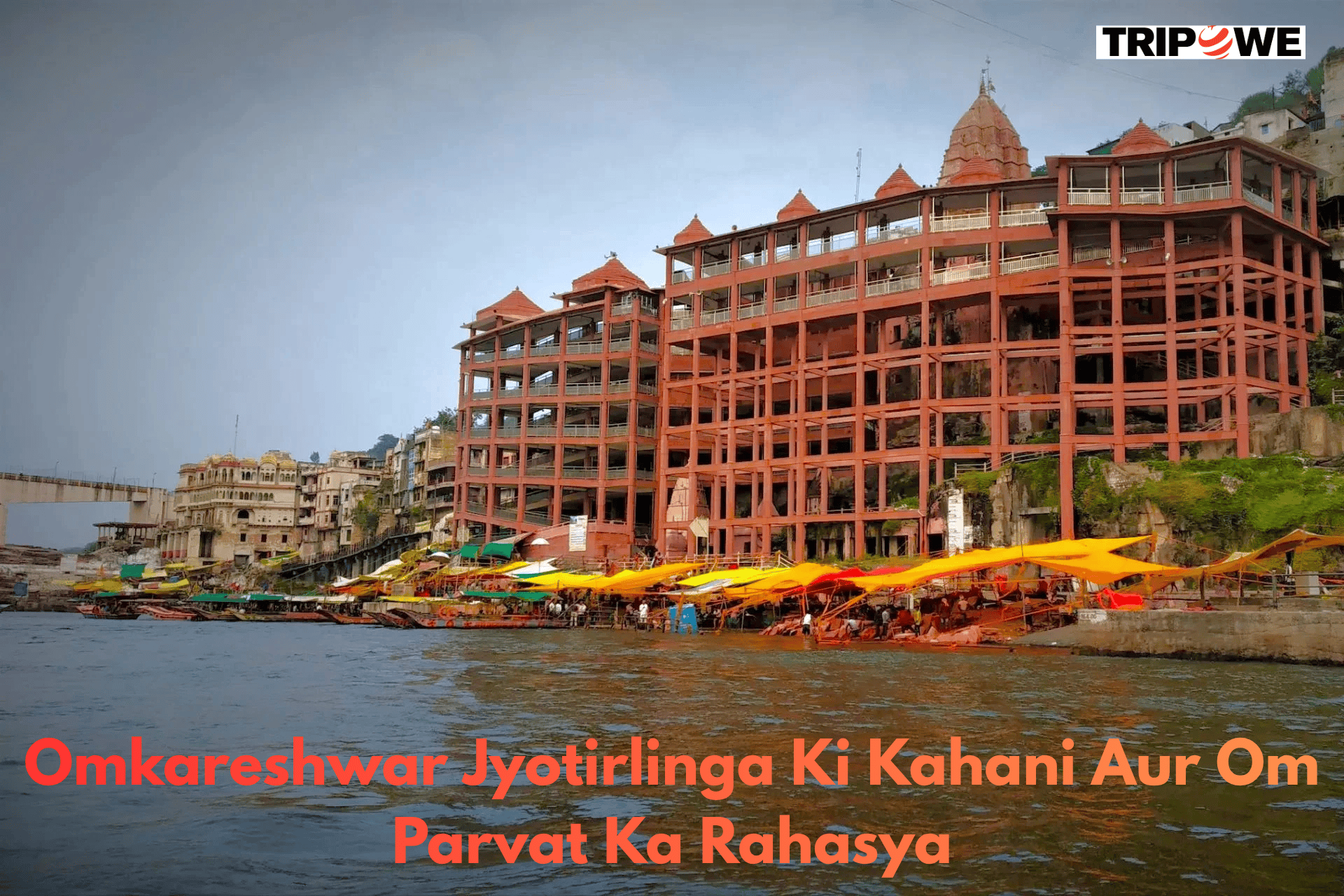
 Omkareshwar Jyotirlinga Ki Kahani Aur Om Parvat Ka Rahasya
Omkareshwar Jyotirlinga Ki Kahani Aur Om Parvat Ka Rahasya: There’s a temple in Madhya Pradesh that sits on a river island shaped like the word “Om.” Not close to it. Not sort of like it. Actually shaped like it, if you look at a map. That’s Omkareshwar, and it’s the kind of place where the story behind it is almost as interesting as the visit itself. This piece walks through the Omkareshwar Jyotirlinga history, the old stories people still tell about how it came to be, and why that island looks the way it does. If you’re planning a trip in 2026 or you just got curious after hearing the name somewhere, you’ll find what you need here.
Omkareshwar Jyotirlinga Ki Kahani Aur Om Parvat Ka Rahasya Quick Answer
Why is Omkareshwar’s island shaped like Om? The temple sits on Mandhata Island, where the Narmada River splits into two branches and curves back in a way that resembles the sacred “Om” symbol from above. It’s a natural formation, not something built or designed, and devotees have long treated it as a sign of something deeper — a connection to the sound the universe itself is said to have emerged from.
Quick Information Table
| Detail | Information |
|---|---|
| Temple Name | Omkareshwar Jyotirlinga |
| Location | Mandhata Island, Narmada River, Khandwa District, Madhya Pradesh |
| Distance from Indore | Around 77 km |
| Jyotirlinga Number | 4th among the 12 Jyotirlingas |
| Nearby Temple | Mamleshwar (Amareshwar) Temple, on the mainland |
| Built/Renovated By | Paramara Kings (11th century), later maintained by the Holkars |
| Architecture Style | Nagara style, five-storied structure |
| Best Time to Visit | October to February |
Table of Contents
- What Makes Omkareshwar So Special
- Omkareshwar Jyotirlinga Ki Pauranik Kahani
- Omkareshwar Mandir Ka Itihas
- Om Parvat Ka Rahasya
- Inside the Temple: Architecture and Rituals
- Omkareshwar Temple Travel Guide 2026
- Best Time to Visit
- Nearby Places Worth Visiting
- Tips for a Peaceful Visit
- Conclusion
- Frequently Asked Questions
What Makes Omkareshwar So Special
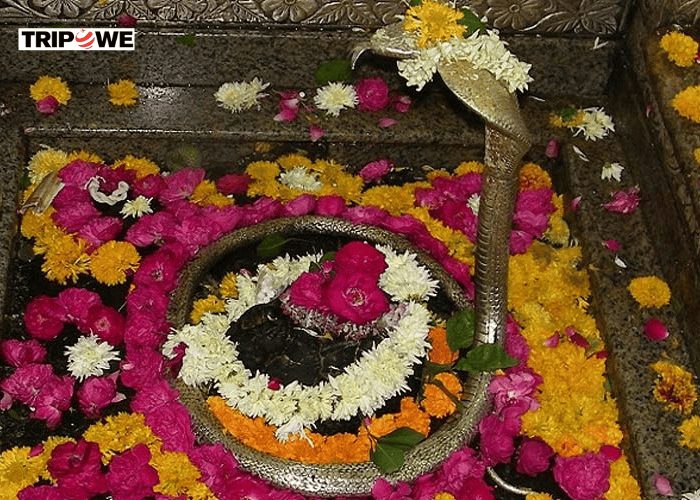
Omkareshwar is one of the 12 Jyotirlingas of Lord Shiva across India — spots believed to mark where Shiva appeared as a “pillar of light,” rather than in any physical form. There are plenty of Jyotirlingas spread across the country, each with its own draw. What sets Omkareshwar apart is simply where it sits: right in the middle of the Narmada River, on an island shaped like “Om” itself.
Even the name reflects this. “Omkareshwar” roughly translates to “Lord of the Om sound,” tying the place directly to one of the oldest and most sacred syllables in Hindu tradition. Ask anyone who’s been there, and they’ll probably tell you it feels less like visiting a temple and more like standing somewhere the story of creation supposedly began.
Omkareshwar Jyotirlinga Ki Pauranik Kahani
Most Jyotirlingas come with a legend attached, and Omkareshwar actually has two that are told fairly often.
Legend 1: King Mandhata’s Devotion
The story goes that King Mandhata, a ruler from the Ikshvaku dynasty — the same lineage Lord Rama belonged to — came here to perform intense penance, hoping to earn Shiva’s blessing. However long he was at it, it worked. Shiva is said to have appeared as a Jyotirlinga right there, and the island has carried his name ever since — Mandhata Parvat, or Mandhata Island.
Legend 2: Vindhya’s Penance
The second story involves the Vindhya mountain range. As the tale is told, the sage Narada once mentioned to Vindhya that Mount Meru held more importance. Vindhya didn’t take that well and went into deep penance to prove otherwise, or at least to become Meru’s equal. Shiva, moved by the effort, granted the request — and chose to stay there, eventually splitting into two lingas: Omkareshwar on the island, and Mamleshwar (also called Amareshwar) across on the mainland.
Neither story cancels the other out, really. They’re both still told, sometimes even by the same guide on the same day, and together they give the place a weight that goes beyond just being another stop on a pilgrimage route.
Omkareshwar Mandir Ka Itihas
Beyond the mythology, there’s a real, recorded history here too, and it helps to know it before you walk in.
Table: Timeline of Omkareshwar’s History
| Period | What Happened |
|---|---|
| 10th–13th century | Ruled by Bhil chieftains under the Parmar rulers of Malwa, later by Chauhan Rajputs |
| 11th century | The current temple structure is believed to have been built under the Paramara Kings |
| 13th century | Faced invasions, but the temple survived largely intact |
| 18th century | Marathas took over the region; several temples were renovated during this time |
| Later years | Queen Ahilyabai Holkar took a personal interest in restoring and maintaining the temple |
| 1894 | The British eventually gained control of the wider region |
There’s also a smaller detail worth mentioning — a cave sitting just below the temple, where it’s believed Adi Shankaracharya once met his own spiritual teacher. It’s easy to miss if you’re not looking for it, but it adds another layer to a site that already has plenty going on.
Om Parvat Ka Rahasya
This is really the part that makes Omkareshwar different from every other Jyotirlinga on the list — the island’s shape.
Why Does It Look Like “Om”?
The Narmada splits into two branches right at this point, curving around the land in a way that traces out the Devanagari “ॐ” when seen from above. Nobody built this. No engineer planned it. It’s just how the river happened to carve the land over time, and that’s exactly why devotees find it so meaningful.
A few things worth knowing about it:
- The island itself goes by two names — Mandhata Island and Shivapuri.
- It forms right where the Narmada splits into its two flowing branches.
- Devotees see the Om shape as tied to the very sound the universe is said to have come from.
- For many pilgrims, simply standing on this island feels like standing on that symbol itself.
One honest note for visitors — you won’t necessarily see the “Om” shape clearly just by walking around. It’s much easier to make out from aerial photos or satellite maps. Still, knowing it’s there changes how the visit feels.
Inside the Temple: Architecture and Rituals
The temple complex itself has its own story to tell, separate from the myths and the island’s shape.
Table: Temple Architecture Highlights
| Feature | Detail |
|---|---|
| Structure | Five-storied temple complex |
| Style | Nagara architectural style |
| Pillars | Roughly 60 carved stone pillars in the main hall |
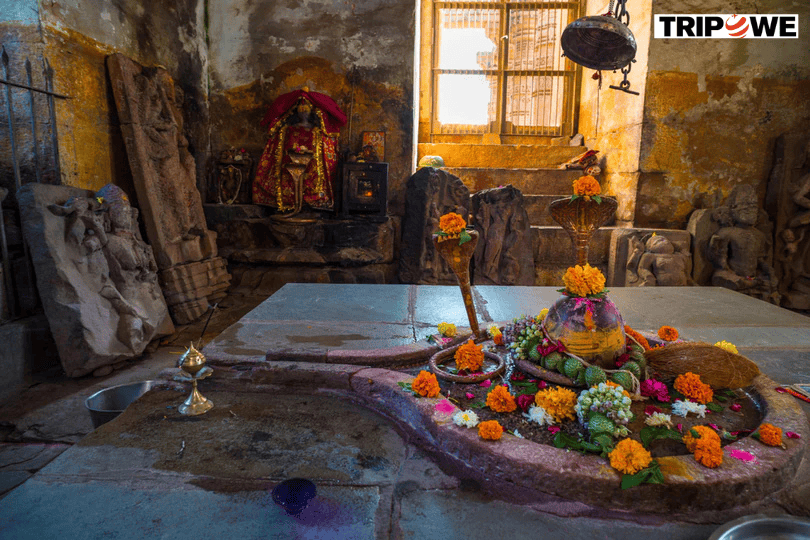
| Jyotirlinga | A roundish black stone, partly submerged in water |
| Nearby Shrine | A white stone representing Goddess Parvati, close to the main linga |
| Additional Shrines | Panchamukhi Ganesha and Annapoorna Devi, within the same complex |
A few rituals stand out here more than most:
- Morning Aarti — the day’s first prayer, held early.
- Shayan Aarti — a nightly ritual with a curious detail: a traditional board game called Chausar is set up in a room, based on the belief that Shiva and Parvati come to play it after everyone else has left.
- Narmada Aarti — performed each evening on the riverbank, and probably the most photographed moment of the day.
Omkareshwar Jyotirlinga Ki Kahani Aur Om Parvat Ka Rahasya: Travel Guide 2026
If you’re actually planning the trip rather than just reading about it, here’s the practical side.
Getting There
- From Indore: About 77 km, roughly 1.5 to 2 hours by road.
- Nearest Railway Station: Omkareshwar Road, connected to most major cities.
- By Road: State highways connect it easily from Indore and nearby towns.
For First-Time Visitors
- Reach Omkareshwar town, then cross to Mandhata Island — by bridge or boat, depending on what’s available that day.
- Visit the main Omkareshwar Jyotirlinga temple first.
- Head to Mamleshwar Temple on the mainland afterward — many devotees treat the visit as incomplete without both.
- Stay for the evening Narmada Aarti along the riverbank.
- If there’s time left, a few smaller caves and shrines around the island are worth a look.
Best Time to Visit
October to February tends to work best, mainly because the weather makes walking around the island and temple steps far more comfortable.
A few things that help:
- Mornings are noticeably calmer than afternoons.
- The evening Narmada Aarti is genuinely worth planning your day around.
- Wear shoes you don’t mind walking a fair distance in.
- Modest clothing is expected, as with most Hindu temples.
Nearby Places Worth Visiting
Since you’ll already be in the area, a few nearby spots are worth adding to the day:
- Mamleshwar (Amareshwar) Temple — the mainland twin to Omkareshwar.
- Narmada Ghat — quiet, and especially nice around aarti time.
- Kajal Rani Cave — smaller, with its own local legends.
- Sri Yantra Meru Temple — a structure worth seeing for its architecture alone.
Tips for a Peaceful Visit
- Go early morning or evening — midday heat isn’t kind to a walking pilgrimage.
- Carry some cash. Not every stall or boat ride here takes digital payments.
- If your schedule allows, combine this trip with Mahakaleshwar in Ujjain — plenty of devotees do both together.
- Wear something you can walk in comfortably.
- Before you head out, it’s worth checking the official Madhya Pradesh Tourism website for the latest travel and stay options.
Conclusion
Omkareshwar isn’t the kind of place that fits neatly into a single description. It’s part legend, part real history, and part natural coincidence that somehow still feels intentional. Whether you’re drawn in by the story of King Mandhata, the Vindhya legend, the Paramara-to-Holkar timeline, or simply the fact that a river decided to carve an island shaped like a sacred symbol — there’s more here than a quick darshan usually accounts for. If a 2026 visit is on your calendar, give yourself time to actually sit by the Narmada for a while. It’s usually the part people remember most.
Frequently Asked Questions (FAQs)
Q1. What is the history of Omkareshwar Jyotirlinga?
The current structure is believed to date back to the 11th century, built under the Paramara Kings of Malwa, with later restoration work carried out by the Holkars in the 18th century.
Q2. What is the mythological story of Omkareshwar?
Two legends are commonly told — one about King Mandhata’s penance pleasing Shiva, and another about the Vindhya mountain’s devotion, after which Shiva split into two lingas: Omkareshwar and Mamleshwar.
Q3. Why does the island look like the symbol Om?
The Narmada River splits into two branches at this exact point, curving in a way that resembles the Devanagari “ॐ” when seen from above.
Q4. How far is Omkareshwar from Indore?
Around 77 km, roughly a 1.5 to 2-hour drive.
Q5. What’s the best time to visit Omkareshwar?
October through February, when the weather makes walking around the temple and island far more pleasant.
Q6. Is Omkareshwar one of the 12 Jyotirlingas?
Yes — it’s the fourth among the twelve.
Q7. What other temple is connected to Omkareshwar?
Mamleshwar (or Amareshwar) Temple, on the mainland, is considered its twin, and many devotees visit both.
Q8. What’s unique about the temple’s rituals?
Beyond the regular aartis, the Shayan Aarti stands out — a board game called Chausar is symbolically kept ready, based on the belief that Shiva and Parvati play it after hours.
Q9. Can you actually see the Om shape while standing there?
Not really — it’s much clearer from aerial views or maps than from ground level.
Q10. Is it doable as a day trip from Indore?
Yes, easily. At 77 km away, most travellers manage it comfortably in a single day.